
Getting Started With The Marvel Multiverse RPG
First time running a game? This is for you...

When I started running the Marvel Multiverse Roleplaying Game it was because I was excited by the prospect of marrying my knowledge of Marvel Comics with the experience of a tabletop RPG. If that sounds familiar, like it’s what drew you to this system in the first place as well, then this article should hopefully be of great help. This isn’t a review of the game or an attempt to sell it to you, it’s a guide for people who have made the decision to play it but have little to no experience with TTRPGs, and so need a bit of guidance on how to actually set the game up and play a session. If that sounds like you, then you’re in the right place.
Assuming you’re totally new here: Hello, my name is Ciarán, I’ve run Marvel Multiverse at conventions, for friends and strangers, and even gone through an entire campaign over the course of a year and some months. That is to say, I’ve introduced this game to a good few people, and they’ve all enjoyed the experience. So hopefully I can be of help.
If you want the short version of this article, then here’s a summarised list of the major elements:
Get the Marvel Multiverse Roleplaying Game Core Rulebook in physical or .pdf form
Open up the Errata and FAQ .pdfs on marvel.com/rpg
Read the Core Rulebook from cover to cover, referencing the Errata and FAQ documents whenever you feel confused, and also note any changes the Errata make to the printed rules
Gather your friends/players together to discuss character creation/selection and the type of game they want to play, then create/select your characters and set a time and date for the session
Familiarise yourselves with the characters that are going to be involved in the session by checking what their powers and traits do
Plot out the session on your own with an inciting incident, a period of discovery, and a climax with a resolution, potentially teasing further adventures
Gather any materials you need to make the session work, like enemy character sheets, dice, grid paper, tokens/coins/minis, the Core Rulebook, the Quickstart Rules, etc.
Run the session
Now, if you want to know why you should do all of those things in that sequence, then you can keep reading.
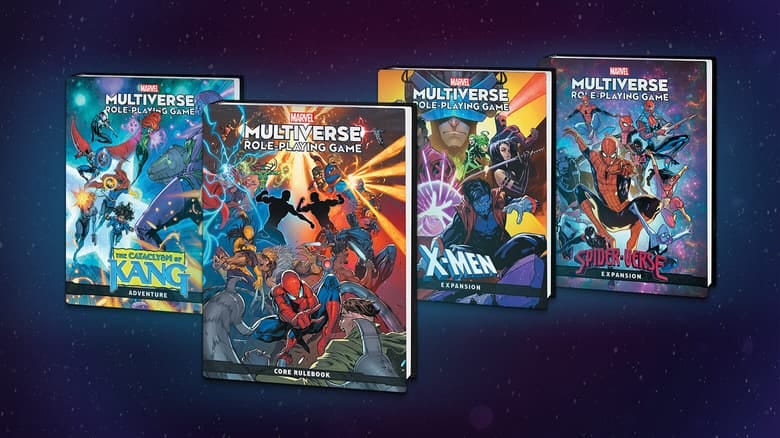
First off, if you don’t have it already, get the Marvel Multiverse Roleplaying Game Core Rulebook. If you do have it already, or once you get it, then you should read it. Cover to cover, preferably in one sitting. That’s what I do whenever I know I’m going to be running a game with a particular system. Unlike most games, Marvel Multiverse isn’t bogged down with breakdowns of classes or the abilities gained through progression, and so on and so forth. The book is laid out in something of an ad hoc manner, making it so that you get the information you need in a sequence that feels natural.
Now, I didn’t do this next bit because I couldn’t at the time, but before you start reading the book you should go to marvel.com/rpg and open up the FAQ and Errata documents there. Then start reading the book. Any time you find yourself stumbling over a section or feeling confused, check those two documents to see if there is a clarification or a correction for the thing that has you befuddled. If not, make a note of it, then just keep reading. You can submit an FAQ to the development team once you’re finished.
The good news is, you don’t have to retain all the information after the first read-through. You’re only doing this to familiarise yourself with the language of the game and get a broad sense for the mechanics. If you’re a note-taker or a highlighter, then take notes and highlight anything that you deem important. I’m not going to sit here and tell you what you need to focus on, because I don’t do that, I just read it like it’s a regular book and absorb what I can.
If you’re a lunatic like me that doesn’t mind defacing your books; scribble things out with a pencil and change the wording where the Errata document says a change is required. I dunno if later printings of the book have the Errata alterations included in them, so this is essential if you want to make sure you have up-to-date and accurate information on certain rules or character sheets before running the game.
Once you’ve read the Core Rulebook, you’re ready to run the game. You might not feel like it, but you’re in a much better position to do so than you were before you read it, so stop dilly-dallying and set a time and date for the game with your friends.
“But Ciarán, I don’t have a story for the session yet!”
And now you have the incentive to come up with one. If you don’t set a time for playing the game, and for how long, then you’ll hum and hah over when to do it until the lightning of inspiration strikes, which will be never. If you came into this process with a story in mind, then great, it’s time to start fleshing that out. If you don’t have anything at all in your head, then what follows will be of help.
Gameplay sessions aren’t like regular stories. You’re not an active participant in most stories, you’re a passive viewer. In TTRPGs, you and at least one other person are actively participating in a story, shaping it however you all see fit, in collaboration with one another. This is to say that if you have a story in mind then you shouldn’t be too precious about it. There is every likelihood that one or more of your players are going to do something you couldn’t have anticipated, and that’s fine so long as it doesn’t ruin the fun for someone else at the table. Having read the Core Rulebook, you’ll be familiar with this kind of talk (wink wink, nudge nudge). The goal of a session is to make sure everyone enjoys themselves by participating in the story, and it’s everyone’s responsibility to make sure that happens, not just the Narrator’s.
So, let’s say you’ve got an idea for a story in mind. You need to tell your players what the barebones of that story are going to be so that they can prepare themselves accordingly. They need to know things like:
Character Ranks and identities
Vibes
Setting
Important background information about the world
If you don’t have a story in mind, then those four things are what you need to consider first. You can consult with the players beforehand to get an idea of what kind of game they want to play. Do they want to be Avengers or Guardians of the Galaxy? Maybe they’re big fans of the Marvel Cinematic Universe and want to play in that world? Communication among all participants is essential to everyone’s enjoyment. Once you know what kind of a game you’re going to be running and everyone is on the same page about it, then you can start plotting out the session or the campaign.
As an aside for anyone who’s reading this that’s going to be playing in a game and not running it: Learn your chosen or created character’s powers to the best of your ability. This is something you can do during character creation / selection with everybody having access to the Core Rulebook. You can take note of the vital information like the powers’ Focus costs, the action types, the ranges, the durations, and shorthand any effects that the powers have.
When writing up your character, you can print off the official sheets to write on or simply write all the information down in a notepad by hand. I recommend hand-writing these sorts of things at first because it will commit information to your memory much better than using a digital tool. If your Narrator has the .pdf of the Core Rulebook, then they can print out a character sheet for you to use and you can write their power descriptions on the blank side of the sheet.
There are also some character sheets available for free online that include a reference sheet for the characters’ powers. These can be found in both the Quickstart Rules With Thunderbolts Adventure and in the Convention Play Pack on DriveThruRPG. If you’re playing as one of those characters, then great, you have reference for all of your powers on there and don’t need to do any note-taking, but you should make an effort to learn what your powers do beforehand so that you can piece together any fun combos or prioritise certain powers over others at the table.
Now, back to addressing the Narrators.
You’ll often hear people say that you need to run a one-shot of a game before you start a campaign with that system. I don’t agree with that sentiment. Not that one-shots aren’t a great way to experience a game for the first time, but they aren’t the only way or even the preferred way. I have never gotten into a game through playing a one-shot. It has always been a case of joining a pre-existing group in the middle of a campaign or starting one from scratch. I’m sure the same is true of most TTRPG veterans.
However, if you have a giant, sprawling epic in mind, then you don’t need to plot all of that out. You’re only getting started, so just plot out the beginning. You’ll only end up overwhelming yourself if you try to account for an entire campaign before even rolling any dice. Your first session is your opportunity to lay the groundwork for everything else that’s swimming around in your head to eventually materialise at the table.
What that first session should consist of can also be something that you and your players decide beforehand. If everyone seems gung-ho for big superhero action sequences, then focus on combat. If people want to experience the social interaction of superheroes in a team, then focus on socialisation. If they want to discover things about the world, then focus on exploration. Regardless of which of these you choose to focus on, there’s going to be a little bit of each, because all of those things make up the concept of roleplaying. So long as you and your players aren’t behaving like you actually would but how your characters would, then you are roleplaying. Do away with this notion of funny voices and flawless improv. Be a superhero. That’s it. Do that to the best of your understanding and you’ll be in step with the spirit of the game.
The decided setting for the game is going to factor into how people play the game. If things are going to be set on the mean streets of New York, then the players might portray their characters with a bit more grit than if they were flying around the world in a Helicarrier. Whatever the decided setting or tone of the game ends up being, let that inform the story that you set out to tell. Of course, if you had the story in mind before sitting down with your players, then you should definitely let them know what kind of game you want to run, in what setting, with what tone, and have everyone conform to that. At least to start with. Things can evolve as you play for longer periods. Once you’ve nailed down your setting, tone, and characters, then it’s time to come up with the meat of the session.
My basic approach to coming up with sessions is to think in terms of acts. The first act needs to incite the players to action, it needs to provide a hook for them to uncover the rest of the story. The second act is the process of discovery or the deepening of a mystery. The final act is the climactic occasion followed by the resolution of any conflicts, and the teasing of any potential future story hooks.
For example, in my homebrew one-shot, Blink Of An Eye, the Defenders start the session in a fight with some standard criminals until some of them start teleporting around the place. The team discovers that a new drug has hit the streets called Blink, which allows people to teleport short distances. What follows is an investigation that plays out on the streets, with the Defenders consutling police officers and criminal informants for information on this new drug, as well as staking out criminal hotspots, and maybe getting into an altercation with a minor villain that could be physical or social in nature. The climax sees the team infiltrate the production facility for Blink and subsequently engaging in a fight with the Hand, who are behind the production of the drug. Once the Hand are defeated, the Defenders ensure the destruction of the Blink production line, and the drug’s dissemination on the streets of New York is put to a stop. But the drug’s ingredients had to come from somewhere, so who’s the supplier, and can this whole thing be cut off at the true source?
See? Inciting incident, process of discovery, climax and resolution, with a tease of potential future adventures. Notice how there’s two instances of combat that bookend a period of socialisation and exploration? That’s the kind of thing you want to gun for in an introductory session. It ensures that everyone gets a taste of everything rather than repeating combat encounters over and over again. It’s also a great way to get your players to account for more than just their powers or abilities on their character sheet, and to instead pay attention to their traits and tags as well, because those elements can be a real source of inspiration when interacting with the world you’ve put together for them.
So, you’ve got an idea for a story and a notion of how to put together your opening session, now you have to get ready to run the thing. It always helps to keep vital information to hand whenever you’re running any kind of game, like the character sheets for any villains or henchmen you plan to include, and maybe you want to keep those kinds of things secret from your players. You might also want to have something to physically represent the field of combat during fight scenes. Whatever you are capable of doing on the day of running the game, then that is what you do.
There’s absolutely no world in which you need to have a Narrator’s screen to hide things or a battle-mat to run combat on. All you need are the players, some character sheets, and your dice. Your collective imaginations can do the rest of the work. While there are official materials like dice, minis, and Narrator screens available for Marvel Multiverse, you can just as easily make do with household items and DIY options. I spent the entire time I ran my first campaign using a homemade Narrator’s screen made out of sliced up binders, duct tape, and poly sleeves. And we used HeroClix I bought off ebay for minis. None of that was essential, though. It was purely down to personal preference among my players and I.
There can often be pressure on first-time Narrators to be as good as the pros, or to at least conform to a standard set by the public-facing side of the TTRPG industry. Let me tell you, I’ve been doing this TTRPG thing for a long time, and I still think I suck at basically every element of running a game. I muddle over descriptions, I do maths wrong, I mix up character names, and all kinds of other things. But my players seldom, if ever, have a bad time. Because the enjoyment of the game isn’t relying entirely on me getting everything right, but on all of us at the table wanting to enjoy ourselves. Whatever reservations you might have about “screwing things up”, do away with them, because nobody’s going to know any better anyway if you’re all first-timers. And once you’ve all got some experience, you’ll understand the game and each other all the better.
As the Narrator, you’re always going to want to have your Core Rulebook to hand, as well as a summarised version of your plan for the session. That summary can be a few bullet points, or some sheets of paper to stick to your Narrator’s screen or Core Rulebook with blu-tac or a paperclip that summarise each individual act in a more in-depth fashion. Whatever brings you the most comfort and confidence at the table is what you should have with you. That can include food. You’ll also want any materials you’ve prepared like enemy character sheets or physical props or puzzles. Additionally, you can send the Quickstart rules to all of your players so that they can have access to their own personal rules reference during gameplay.
So, a checklist for the new Narrator of the group might look something like this:
Core Rulebook
Adventure summary
Character sheets for enemies
Dice
Pen
Paper
A checklist for the new players of the group might look something like this:
Character sheet
Dice
Pen
Paper
Quickstart rules
I have dice in both the Narrator and player lists becuase the norm is for people to have their own set of dice to roll for themselves, but if the Narrator has a set of dice for the table then that’s fine too. Some optional bits and pieces for the Narrator might include:
Dry-erase battle-mat
Dry-erase markers
Narrator’s screen
Minis / Tokens
That’s it. That’s everything you could possibly need to run the game at the most basic level. If I were to make any further recommendations for a more advanced experience then they would be as follows:
Send your players this video featuring a couple of the folks from the Glass Cannon Network giving a tutorial on character creation and gameplay. The GCN have filmed multiple playthroughs of the game also, if you would like to see it in practice.
Get the Avengers Expansion if you want the bulk of the broadly applicable new official rules like advancement and Sinister Plot Points without having to buy all three expansions from the last few years.
Get the Cataclysm of Kang adventure book if you want to have a framework for running a campaign and a wider array of characters to choose from. Many of the new rules in the expansions have their roots in this book, so it can function as inspiration for developing your own house rules that are in line with the game’s development as you play further with the game.
Get the Escape From Planet Hulk Starter Set if you’d like for the bulk of the work I’ve mentioned above to be done for you and to have substantial resources at your disposal for running the game more smoothly.
Make an account on Demiplane and Roll20 and sync both of those accounts so that you can more easily manage running the game online, should you need to do so. Demiplane also has a character builder with printable character sheets.
Subscribe to FuzzyOnTheDetails on YouTube, and bookmark his website. You will find homebrewed adventures, character sheets, and various other resources across both of those.
Subscribe to Fantastic Success and tell your friends to do the same, because all of the stuff I post is free and it most likely always will be.
I regularly post advice for running the game, as well as homebrew powers, adventure modules, and house rules. I also do my best to keep people up to date with all the latest news for the the Marvel Multiverse Roleplaying Game and offer reviews of any official products that I can get my hands on. So, if you’re getting started with the game then there’s no better place to be than here. I’ll be happy to have you along.
To that end, if you are going to be running a game of Marvel Multiverse in the not too distant future, then why not send this article to your prospective players? I’m sure they’ll get just as much out of it as you have. If you’re going to be a player in a game of Marvel Multiverse in the not too distant future, then you should definitely send this to your Narrator. That way, everybody’s singing from the same hymn sheet.
That just about does it for this week. Be sure to leave any other pertinent advice for TTRPG newcomers in the comments, especially if it pertains to running or playing Marvel Multiverse. Nobody runs any game the same way as anyone else, so the collaboration and sharing of resources is a mighty boon for us all.
To any first time Narrators reading this now, hopefully by the next visit you’ll have a session under your belt and you can tell me all about it. And to any first time players sending this to your Narrator: go easy on them.
Till then: Excelsior!